

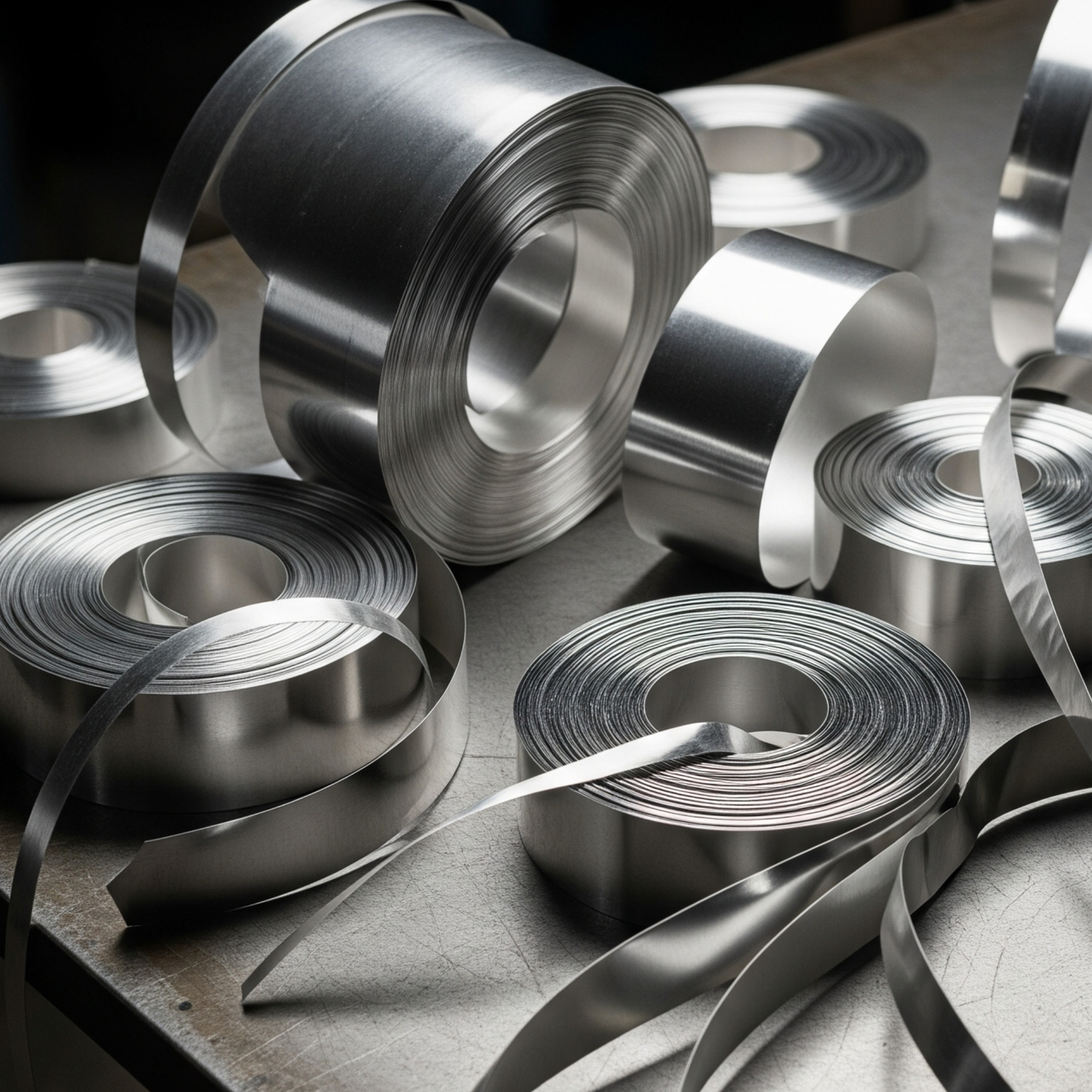
0.02mm Thick Titanium Grade 2 Foil
0.02mm Thick Titanium Grade 2 Foil
Titanium Grade 2 Foil
Purity : 99.6+%
TITANIUM ASTM B 265 Annealed Foil
UNS R50400 . W.Nr.3.7035
| Dispatch Estimate | : 3-5 Working Days |
| Packaging | : Free |
| Certification | : Certificate of conformity or Mill Certificate provided. |
| Shipping | : Free Shipping to anywhere in UK, International by Courier. |
Note : Contact us directly if you need larger quantity, custom cut lengths or lengths longer than those listed above. We will be happy to assist you.
1. General & Technical Specifications
What is considered "titanium foil"? Titanium is generally classified as "foil" when it is rolled to a thickness of less than 0.15 mm (0.006 inches). Anything thicker is typically categorized as sheet or plate.
What are the most common grades for foil?
Grade 1: The most ductile and softest; ideal for deep drawing and complex forming.
Grade 2: The "workhorse" grade; offers a balance of strength and excellent corrosion resistance.
Grade 5 (Ti-6Al-4V): High strength but difficult to roll into very thin gauges due to its hardness.
Grade 9 (Ti-3Al-2.5V): Preferred for thin-gauge technical applications because it can be cold-rolled more easily than Grade 5 while maintaining high strength.
What is the thinnest titanium foil available? Using high-precision twenty-roll mills, titanium can be rolled as thin as 0.001 mm (1 micron), though standard industrial "ultra-thin" foil usually ranges from 0.01 mm to 0.05 mm.
2. Applications & Performance
Why use titanium foil instead of stainless steel or aluminum? Titanium offers a superior strength-to-weight ratio (45% lighter than steel) and better corrosion resistance in saltwater and acidic environments. Unlike aluminum, it maintains its structural integrity at temperatures up to 600°C.
Is titanium foil biocompatible? Yes. Titanium is non-toxic and non-allergenic. It naturally forms a stable oxide layer that prevents it from reacting with human tissue or fluids, making it the primary choice for pacemaker enclosures and medical implants.
How is it used in acoustics? Titanium foil is used for high-end speaker diaphragms and tweeters. Its high stiffness-to-weight ratio allows the diaphragm to vibrate at high frequencies with minimal distortion, producing "bright" and clear sound.
3. Manufacturing & Handling
How is titanium foil manufactured? It is produced through a repetitive process of cold rolling and vacuum annealing. Rolling reduces the thickness, while annealing (heating in a vacuum) restores ductility so the metal doesn't become too brittle to continue thinning.
Can titanium foil be welded? Yes, but it is highly reactive to oxygen and nitrogen when heated. It must be welded using TIG or laser welding in an inert gas (Argon) environment to prevent embrittlement.
What are the best practices for handling foil?
Wear Gloves: Fingerprint oils can cause "carbon contamination" during heat treatment or welding.
Avoid Contamination: Keep titanium away from iron or steel tools to prevent "iron smear," which can lead to localized corrosion.
Storage: Store flat or on original cores with interleaving paper to prevent creases and scratches.
Why is titanium foil more expensive than other foils? The cost is driven by the high raw material price and the complex rolling process. Achieving ultra-thin gauges requires multiple passes through specialized mills and several rounds of expensive vacuum annealing to prevent the metal from cracking.
Share
Disclaimer
All the information on this website is published in good faith and for general information purpose only and not for technical design purposes. We do not make any warranties about the completeness, reliability and accuracy of this information. Any action you take upon the information on our website is strictly at your own risk. and we will not be liable for any losses and damages in connection with the use of our website.